Country
World
Location
France

Author
Anton & Sabina Yasirov, YASIROV Films
Wedding Videographer in France: Provence and Château Films
Updated
Wedding films in France by YASIROV Films: a château wedding near Paris, a Provence day in Mougins, and how we plan private-estate weddings outside Italy.
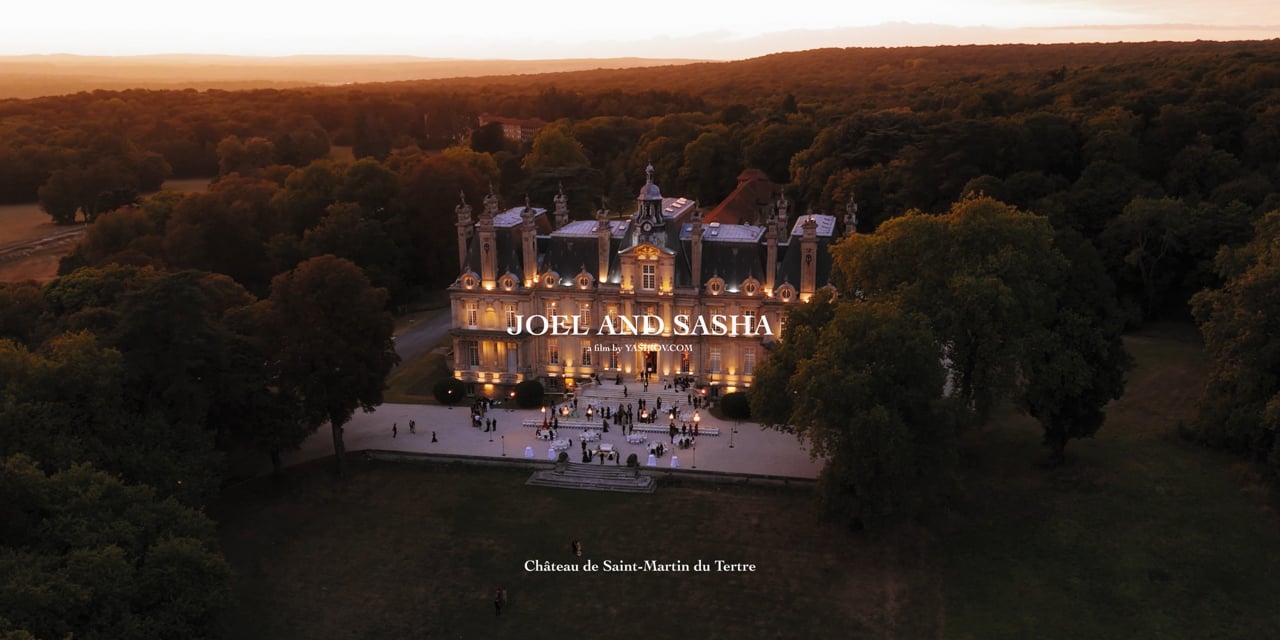
Joel and Sasha married at Château de Saint-Martin-du-Tertre in Val-d'Oise, just north of Paris, in a ceremony set against the château's formal facade with the grounds stretching out behind them. A few seasons later, we filmed Michael and Evey's wedding in Mougins, a hilltop village above Cannes, where the light off the Provençal countryside gave the whole day a golden, unhurried feel. Two very different corners of France, two very different atmospheres, and a reminder that our work has always extended beyond Italy, even if Como is where people usually find us first.
YASIROV Films beyond Italy
Lake Como is where we're based and where most of our work happens, but we film destination weddings across Europe too, from France to Sweden. France is one of the countries we return to most, for the same reasons couples choose it: the château tradition, the Provençal countryside, and a formal grandeur that's distinct from what Italy offers.
Couples sometimes assume a videographer based in Italy only works in Italy. That's not the case for us. At a formal château outside Paris or a relaxed countryside celebration in the south, we bring the same observational, documentary approach we use on every wedding, adapted to the setting.
The château wedding: formality and scale
A château wedding carries a different weight than a countryside villa wedding in Italy. Joel and Sasha's wedding at Château de Saint-Martin-du-Tertre had a formality to it (the symmetry of the building, the long approach up the drive, the sense of stepping into something historic) that we leaned into rather than working against. You can watch their film here.
The château is about 30 minutes from Paris and around 15 minutes from Charles de Gaulle airport, which makes it one of the easier château venues for international guests. It sits in a 42-hectare park and forest, can host up to around 340 guests across its halls and galleries, and is booked on an exclusive basis, so no other event shares the property on your day.
Château weddings often involve larger guest lists and more structured timelines than an intimate Italian estate wedding, and we plan our coverage accordingly: the grandeur of the setting, and also the quieter, more personal moments that can get lost in a bigger production.
Many châteaux across France, particularly around Paris, in the Loire Valley and in Normandy, operate as full wedding venues with their own event teams. That makes logistics more predictable than at a private estate, which helps when a wedding weekend also involves travel for international guests.
Provence: light, countryside, and a slower pace
Mougins, where Michael and Evey married, sits above Cannes with views across the Provençal countryside, and it's a completely different register from a formal château wedding. You can see their film here. Weddings on the Riviera and in Provence tend toward a relaxed, garden-party feel: long dinners outdoors, stone farmhouses (mas) and bastides turned into venues, olive trees and cypresses. The light has a particular softness in the early morning and again in the evening, and we build the shooting schedule to make the most of both. Mougins is roughly half an hour by car from Nice Côte d'Azur airport, the main international airport for the region.
If lavender fields are on your wish list, know that they're mostly inland, in Haute-Provence around the Valensole plateau, a couple of hours' drive from Cannes, and that they usually bloom from around mid-June to mid-July before harvest. They're a good idea for a portrait session the day after, and harder to fit into the wedding day itself.
Provence also draws couples who want a French wedding without the scale of a full château affair: smaller guest lists, more intimate settings, and a countryside backdrop that films well without needing much staging at all.
Getting married legally in France: residency, and the symbolic option
This is the point that surprises most international couples. In France, only a civil ceremony at the mairie (town hall), performed by the mayor or a deputy, creates a legal marriage. To marry at a mairie, at least one of you (or one of your parents) must have a lasting link to that commune, usually a home there or at least one month of continuous residence before the banns are published. The banns are then posted at the town hall for 10 days before the wedding can take place, and you'll need birth certificates and other documents, translated where required. A religious ceremony in France can only take place after the civil marriage.
For couples who live abroad, that residency requirement usually rules out a legal wedding in France. The common solution, and what most international couples do, is:
- Marry legally at home, at a registry office or town hall, before or after the trip.
- Hold a symbolic ceremony in France, at the château, in the garden or wherever you like, led by a celebrant, a friend or a family member.
A symbolic ceremony has no legal weight, but it gives you complete freedom over the place, the language, the vows and the timing. For a film, that freedom is useful: the ceremony can happen where the light is best, at the hour that suits the venue, without a town hall's schedule. Your guests experience it as your wedding, because it is.
Planning a private-estate wedding in France
Private château and estate weddings in France come with their own logistics, different from what we coordinate in Italy. Many châteaux have specific rules on vendor access, timing, and noise limits, especially properties that are also private homes or listed historic monuments. We coordinate directly with the venue's event team ahead of time to understand what's allowed and when, so nothing about filming becomes a surprise on the day.
Distances matter more in France than couples expect. A château outside Paris and an estate in Provence are about 900 km apart, completely different in atmosphere and weather. Confirm your venue and region early, since it shapes everything from guest travel to the shooting schedule we build around the day.
A few other things worth settling early:
- Drones. France has its own drone rules and restricted zones, published on the official Géoportail map. Venues near airports, like the château country north of Paris close to Charles de Gaulle, can be restricted. We check the specific location before promising aerial footage.
- Weather. June and September are the safest bets. In Provence, the mistral (a strong, cold northerly wind) can blow for days at a time, so outdoor ceremony setups need a sheltered alternative. Summer heat in the south is strong in July and August.
- Sunset. France sits further west in the same time zone as Italy, so evenings are long. Around Paris the sun sets close to 10pm in late June and around 8pm in mid-September. On the Riviera it's roughly 9:15pm and 7:45pm. Plan the ceremony and portraits around those times.
What these weddings look like on film
At Joel and Sasha's wedding, some of our favorite footage came from the approach to the château itself: the building revealing itself slowly as guests arrived, before the formality of the ceremony took over. At Michael and Evey's wedding in Mougins, it was the opposite instinct: staying loose and unhurried, following the golden evening light across the hills as the reception wound down. Both films end up looking distinctly French, and we didn't change our approach for either of them. The settings did the work.
Cost and travel for a wedding in France
A €1,000 deposit per filming day secures your date. For weddings in Italy and Switzerland, travel and accommodation for our team are included. For weddings outside Italy and Switzerland, we quote travel and accommodation for your specific date and venue, so you'll see the full cost before booking. Nice and the Côte d'Azur are close to our base in Como, and there's usually no travel supplement for weddings there.
FAQ
Do you only film weddings in Italy?
No. Lake Como is home base, but we film destination weddings across Europe, including château weddings near Paris and countryside weddings in Provence. France is one of the countries we return to most outside Italy.
Can we get legally married in France if we don't live there?
Usually not. A legal French wedding happens at the town hall, and one of you (or a parent) needs a real link to the commune, typically at least a month of continuous residence, followed by 10 days of published banns. Most international couples marry legally at home and hold a symbolic ceremony in France.
What is a symbolic ceremony?
A ceremony with no legal effect, led by a celebrant or someone close to you, that can take place anywhere at the venue and in any language. For guests it looks and feels like the wedding. The legal paperwork is done separately at home.
What's the difference between filming a château wedding and an Italian villa wedding?
Château weddings tend to be more formal, often with larger guest lists, at venues that operate as structured event spaces. Italian villa weddings are often more intimate and privately run. We adapt our coverage to the scale and tone of each.
Does travel to France cost extra?
It depends on where. Travel and accommodation are included for weddings in Italy and Switzerland. Elsewhere in France we quote them for your specific date and venue. For Nice and the Côte d'Azur, close to our base, there's usually no travel supplement.
What time of year is best for a wedding in Provence or at a château in France?
Late spring through early autumn offers the most reliable weather in both regions, with June and September favored for softer light and more comfortable temperatures than peak summer. In Provence, have a plan for the mistral.
If you're planning a wedding in France, at a château or in the Provençal countryside, we'd love to talk it through. Get in touch through our contact page, or look through more of our work to see if our style is the right fit.
Other stories you may like
The Wedding Weekend: Why Couples Are Planning Three Days Instead of One
Nearly one in three weddings now spans three or more days. What a wedding weekend looks like, why couples are choosing it, and what it changes for guests, vendors and the photos and film.
Super 8 Wedding Film: What It Is and Why Couples Want It
Why couples are asking for Super 8 at their weddings: what the format is, how it looks next to a digital film, the moments it suits, its limits in low light and sound, and how to plan for it.