Country
Italy
Location
Sicily

Author
YASIROV Films
Sicily Wedding Videographer: Coastal Films
Updated
Filming a wedding in Sicily: the coastline and its light, historic architecture, island logistics, the best time of year, and how the day looks on film.
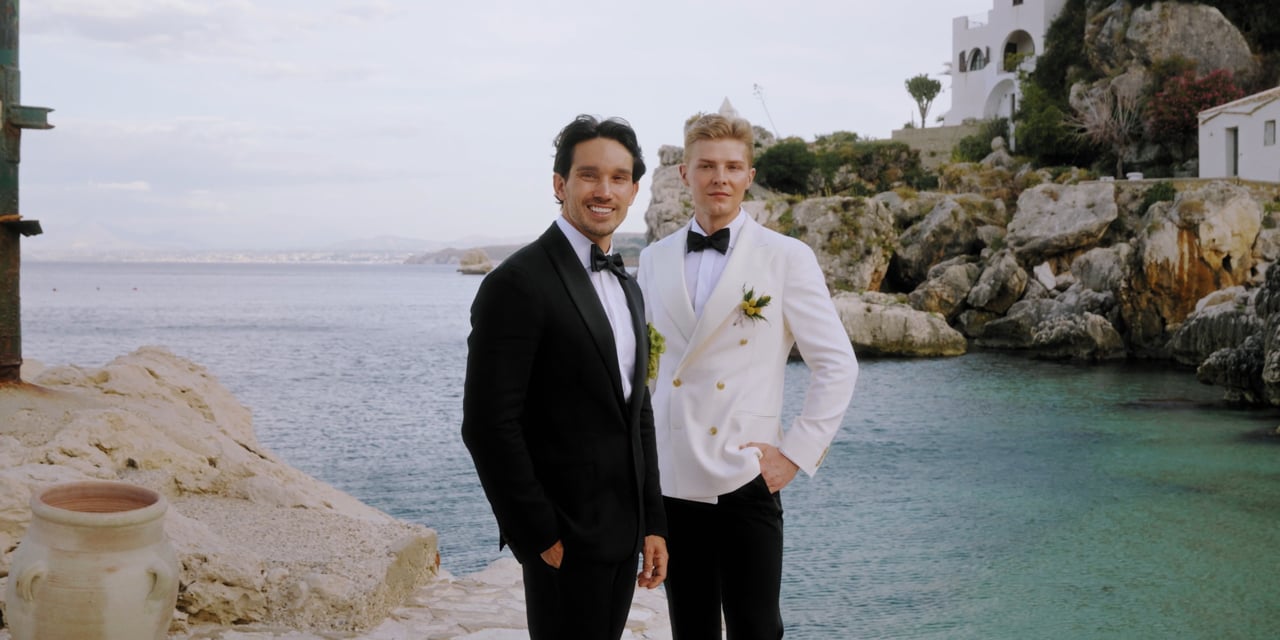
Robert and Erik got married at Tonnara di Scopello, an old tuna fishery turned wedding venue on Sicily's northwest coast, where the faraglioni (sea stacks) rise straight out of the water a few steps from where they said their vows. We filmed their ceremony with the sea as the backdrop, walked the coastal paths with them during golden hour, and stayed late into the night as the reception spilled out onto the terrace under the stars. It's one of those weddings that's stayed with us, not because of any single dramatic moment, but because the whole day felt shaped by the place itself. You can watch Robert and Erik's film here.
Why Sicily is worth a serious look
Lake Como and Tuscany get most of the attention when people think about getting married in Italy, and for good reason: they're beautiful, well established, and easy to plan around. Sicily offers something different, and we think it's still underexplored by couples researching destination weddings. The island has its own architecture, its own light, and a coastline that doesn't look like anywhere else in Italy: cliffs, clear turquoise water, and towns that have changed very little in centuries.
It's also less saturated as a wedding destination. The network of planners and vendors is smaller and more local, and couples often find the whole process more personal. For couples who want something that still feels like Italy but doesn't look like every other wedding film from the mainland, Sicily deserves a place on the shortlist.
The coastline and the light
Sicily's coastline is the reason most couples start looking at the island in the first place. Scopello, where Robert and Erik married, sits on a stretch of coast with cliffs that drop straight into clear water, and the old tuna fishery buildings give a ceremony a sense of history without any added decoration. Further around the island, the coastline changes character: the cliffs near Taormina look toward Mount Etna, while the coast around Syracuse has a softer, lower feel.
The light in Sicily is intense and warm for most of the year, and we plan around it carefully. Midday sun on white stone can be harsh, so we favor ceremonies in the late afternoon, when the coastline turns gold and the sea goes from turquoise to something closer to bronze.
One detail that catches people out at Scopello: the sun doesn't set over the sea in front of the tonnara the way photos suggest. The hills behind the bay block it before the official sunset time, so the buildings fall into shade while the sea is still bright. It's a lovely soft light for portraits, but it arrives earlier than the calendar says, and we time the ceremony and the golden-hour walk around it.
Approximate official sunset times in western Sicily, mid-month:
- May: around 8:10pm
- June and July: around 8:30pm
- August: around 8:05pm
- September: around 7:20pm
- October: around 6:30pm (an hour earlier after clocks go back on the last Sunday of October)
Historic architecture and local culture
Beyond the coast, Sicily's towns and cities carry a layered history: Greek, Arab, Norman and Baroque influences sit side by side in a way you won't find elsewhere in Italy. Palermo's old town, the Baroque towns of the Val di Noto, and countryside estates built around old masserie all give a wedding film a texture that feels distinctly Sicilian rather than generically Italian.
Local culture shows up in the details too: the food, the music, the pace of the day. Sicilian weddings often run later into the night than couples expect, with the celebration building slowly rather than peaking early. We shoot accordingly and stay present through the parts of the evening that often get the least attention elsewhere.
Tonnara di Scopello: what to know
Because it's the venue we know, a few practical points for couples considering it. The venue's own site doesn't publish capacities or booking terms, so most figures below come from wedding planners who work there. Confirm them when you enquire:
- Ceremony type. Planners list the tonnara for symbolic ceremonies only, and the venue's site doesn't mention civil ceremonies. So plan to marry legally elsewhere (at home, or at a town hall) and hold a symbolic ceremony here, and ask the venue and the Comune di Castellammare del Golfo if a legal ceremony on site matters to you. Planners also mention an outdoor church a few minutes away by car for a Catholic ceremony.
- Size. Planners report up to about 300 guests outdoors and 80 to 100 indoors, which matters for the rain plan. Because the site is protected as historic, planners note that large structures can't be put up.
- Staying on site. The venue lists 15 apartments, all facing the sea. Planners put their total capacity at around 50 to 55 guests.
- Exclusive use. One planner reports a minimum booking of 2 nights for exclusive use, or 3 nights for a weekend date. Treat that as an indication and ask the venue for its current terms. Planners also say weddings run from April to October.
- Getting there. The tonnara is roughly 50 km from both Palermo and Trapani airports, about an hour by car either way, and the venue can arrange transfers.
Planning logistics for an island wedding
Sicily is an island, which changes the planning conversation. Guests usually fly into Palermo or Trapani for the west of the island and Catania for the east (Taormina, Syracuse, the Val di Noto). Travel times between venues can be longer than couples expect: Scopello and Taormina, for instance, are roughly four hours apart by road. We recommend anchoring the wedding weekend in one part of the island rather than trying to cover it all in a single trip.
Most coastal venues are reached by winding roads, and many guests won't want to drive them at night. Plan shuttles between hotels and the venue, especially for the return after the party.
The vendor network is smaller and more localized than on the mainland. That's part of what gives Sicilian weddings their personal feel, but it also means booking popular venues and vendors early for the peak season, May through September. If you're looking at 2027, start now.
Legal or symbolic ceremony in Sicily
The legal options are the same as anywhere in Italy. A civil ceremony is performed by the mayor or a delegate at a town hall or at a venue the comune has authorized, in Italian with an interpreter if needed, with two witnesses and a nulla osta from each foreign partner's embassy or consulate. A Catholic wedding covers the legal side too, with church paperwork arranged through your home parish.
Same-sex couples can't marry in Italy but can enter a civil union (unione civile), introduced in 2016. Many international couples, whatever their situation, choose to complete the legal part at home and hold a symbolic ceremony in Sicily. That frees you to choose the spot and the exact time, which on the coast usually means the last hour of good light.
When to go
May, June and September are the most comfortable months. July and August are hot, the midday sun on stone is fierce, and hot sirocco winds from Africa can push temperatures higher for a few days at a time. Mid-August is also peak holiday season across Italy, so roads, beaches and hotels are at their busiest. Early October can still be warm, with the sea still pleasant for swimming, but the days are shorter and the weather less predictable.
What a Sicilian wedding looks like on film
At Robert and Erik's wedding, some of our favorite footage came from the hour before the ceremony, when the light was still soft and the venue was quiet: just the sound of the water against the rocks below the tuna fishery. Through the ceremony itself, the sea stayed in frame as a constant presence rather than a backdrop we had to work around. As the evening moved into the reception, we followed the energy outside onto the terrace, where the celebration ran long past midnight.
That's the thread through most of our Sicily work. The landscape is part of the wedding, and we try to film in a way that keeps that relationship visible instead of treating the coastline as scenery.
FAQ
Is Sicily harder to plan a wedding in than Lake Como or Tuscany?
Not harder, but different. The vendor network is smaller and more local, and travel between areas of the island takes longer than couples expect, so we recommend anchoring the wedding in one area.
What's the best time of year for a wedding in Sicily?
May, June and September give the most reliable warm weather without the most intense heat of July and August. We plan the ceremony timing around the light either way, favoring late afternoon over midday sun.
Which airport should guests fly into?
Palermo or Trapani for the northwest coast, including Scopello (each about an hour's drive from the tonnara), and Catania for Taormina, Syracuse and the southeast.
Can we get married legally at Tonnara di Scopello?
Planners list the tonnara for symbolic ceremonies only, and the venue doesn't advertise civil ones. Most couples marry legally at home or at a town hall and hold a symbolic ceremony at the venue. If a legal ceremony on site matters to you, ask the venue and the Comune di Castellammare del Golfo directly.
Do you have experience filming weddings in Sicily?
Yes. We filmed Robert and Erik's wedding at Tonnara di Scopello on the island's northwest coast, and Sicily is a region we'd like to do more work in, because it suits the documentary style we shoot in.
Does your team travel to Sicily for weddings?
Yes. For weddings anywhere in Italy, travel and accommodation are included in our price, so there's no separate travel fee for a Sicilian wedding. Our wedding films start from €4,500, and elopements from €1,500.
If you're planning a wedding on the Sicilian coast, we'd love to talk it through with you. Reach out through our contact page, or browse more of our recent work to see if our style fits the wedding you're picturing. Still comparing regions? Our guides to Tuscany and Rome cover the mainland options.
Other stories you may like
How to Elope in Italy: Places, Paperwork and Planning
A practical guide to eloping in Italy: the best places, legal and symbolic options, Dolomites rules, timing, and how an elopement film works.
Wedding Locations in Italy: Where to Get Married
Lakes, hills, coast or city? A filmmaker's comparison of the best wedding locations in Italy, with real venues we have filmed and how to choose.