Country
Italy
Location
Lake Como

Author
YASIROV Films
Lake Como Wedding Videographer: A Destination Wedding Guide
Updated
A filmmaker's guide to a Lake Como wedding: best months and light, getting guests around, legal vs symbolic ceremonies, venue rules, a sample timeline and what videography costs.
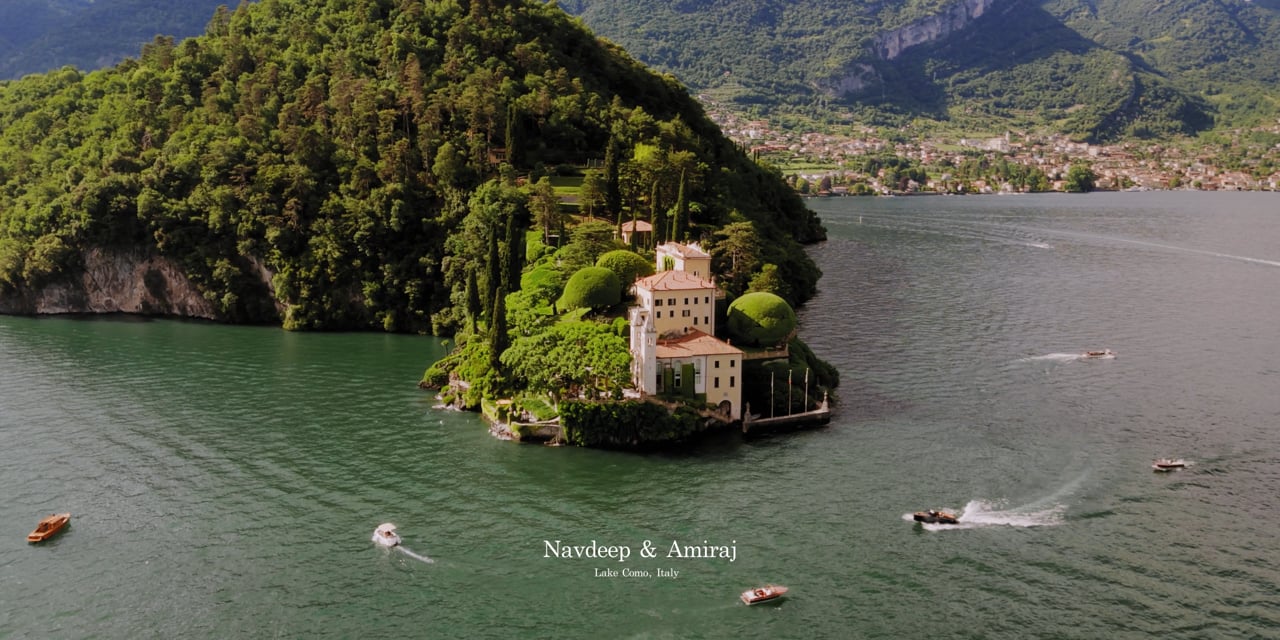
A Lake Como wedding brings together old villas, mountain light and a lake that changes color through the day. I film weddings across Como's venues every season, and I wrote this guide to cover what couples ask us most: when to come, how the light behaves, how guests get from one shore to another, and what to plan so the film tells your day the way it actually felt.
Why Lake Como works so well on film
Lake Como sits between steep mountains, so almost every frame has depth: water in the foreground, a village or villa in the middle, peaks behind. The villas along the shore were built to be seen from the water, with terraces, loggias and gardens stepping down to the lake. That gives a film a natural backdrop without any staging.
What makes Como stand out for wedding videography:
- Mountain landscapes rising straight out of clear water
- Historic villas with frescoed halls and terraced gardens
- Venues that guests reach by boat, which turns an arrival into part of the story
- A long season, from spring gardens in April and May to warm, low light in September
What the landscape can't do is tell your story for you. A videographer who knows the lake knows which shore loses the sun first, how long a boat transfer really takes, and which venues restrict where cameras can stand. That knowledge matters more than any single piece of equipment. You can see how this plays out in our wedding films.
Best months for a Lake Como wedding
The main wedding season runs from April to October. Most venues and many hotels on the lake close or slow down between November and March.
- Mid-April to mid-June: gardens in bloom, fresh green hills, average highs of roughly 19-23°C. May is statistically the wettest month, with around 12 rainy days on average, so a covered backup is essential.
- July and August: the warmest months, with average highs near 29°C. Afternoons can be hazy and thunderstorms can build in the late afternoon or evening. Villages are at their busiest in August.
- September: many planners' favorite month. Highs around 23°C, fewer rainy days than May or June, and softer, lower light by late afternoon.
- October: quieter and cooler (highs around 17°C), with autumn color on the hills. Sunset comes early, so ceremonies move earlier in the day.
These are long-term averages and any single week can be different. Plan for rain in every month.
Sunset and golden hour by season
Approximate sunset times in Como around the middle of each month (local time, at the time of writing):
- April: about 20:10
- May: about 20:50
- June: about 21:15 (the latest of the year)
- July: about 21:10
- August: about 20:30
- September: about 19:35
- October: about 18:40
On the lake itself the sun often disappears behind the mountains well before the official sunset, sometimes 30-60 minutes earlier depending on where you are. The shore matters. Villas on the western shore (Cernobbio, Tremezzina, Lenno) face east, so they get soft morning light and lose direct sun earlier in the evening. Towns on the eastern shore, such as Varenna, face west and get direct evening light off the water. When we plan couple portraits, we check the exact venue position rather than relying on the sunset time.
Getting there and moving guests around the lake
Most international guests fly into Milan. The Bellagio tourism office gives these approximate drive times to Bellagio in the center of the lake:
- Milan Malpensa (MXP): about 95 km, 1 hour 40 minutes
- Milan Linate (LIN): about 75 km, 1 hour 20 minutes
- Bergamo Orio al Serio (BGY): about 65 km, 1 hour 20 minutes
- Lugano (Switzerland): about 40 km, 1 hour 30 minutes
Venues near the town of Como and Cernobbio are closer to Malpensa and Linate. Trains run from Milan to Como and to Varenna, and from Varenna a short ferry crosses to Bellagio, Menaggio and Cadenabbia.
On the lake, public boats are run by Navigazione Laghi. The car ferry only carries vehicles between Bellagio, Cadenabbia, Varenna and Menaggio. Timetables differ between weekdays, Sundays and holidays, and evening services are limited, so do not plan a guest transfer after dinner around a public ferry. For a wedding, most couples book private boats or water taxis, and Navigazione Laghi also takes charter requests.
Roads along the lake are narrow and parking in the villages is scarce, especially in summer. Shuttle buses or boats for guests are usually easier than asking everyone to drive.
Wedding videography styles
Cinematic and editorial
- Best for: couples who want a polished film with strong compositions.
- What you get: carefully framed scenes, slow movement and a filmic grade.
Documentary and storytelling
- Best for: couples who want real moments and no posing.
- What you get: laughter, tears and conversations as they happened, without directing or staging.
Classic and romantic
- Best for: traditional, elegant celebrations.
- What you get: a soft film built around natural light and the calm of the lake.
A good videographer adapts to your day, including cultural traditions, the architecture of your villa and the pace you want. Our own approach is documentary with a cinematic finish: we let the day unfold and step in gently only when a portrait needs a little guidance.
Same-day phone content for Instagram and TikTok is a different job from the film and is usually booked separately. Como Content Creator explains how the two fit together in content creator and wedding film team: how we work together on the day.
Villas and historic venues
Villa del Balbianello: set on a wooded peninsula near Lenno and owned by FAI, the Italian National Trust. It appeared in Casino Royale and Star Wars, and it takes careful planning. Venue guides list outdoor ceremony capacity of roughly 80-150 guests depending on the area, and up to about 75 indoors. Guests usually arrive by boat, and civil ceremonies are possible here. Our Villa del Balbianello guide covers the details.
Villa Carlotta: a museum and botanical garden in Tremezzina with neoclassical architecture and lakefront paths. It is open to visitors daily (10:00-19:00 at the time of writing), so ask the villa's office how a wedding fits around public opening hours.
Villa Pizzo: a 17th-century residence in Cernobbio on a promontory that is fully visible only from the lake. Ceremonies take place in the gardens in front of the villa, with neoclassical rooms as an indoor option, and couples can arrive by boat at its 19th-century dock. Venue listings give up to about 200 guests outdoors and 110 indoors, with outdoor parties until midnight. It is quieter than the busiest venues on the lake.
Villa Balbiano: a 16th-century palazzo in Ossuccio, known as a filming location for House of Gucci. It has over two hectares of gardens, an outdoor pool, a private pier and frescoed interiors that work well for getting-ready footage. The lakefront lawn suits formal ceremonies and aperitifs, and a legal civil ceremony can be held at the villa as well as a symbolic one.
For more venues, including the ones we have filmed at ourselves, see our list of top Lake Como wedding venues.
Legal or symbolic ceremony
Many international couples marry legally at home and hold a symbolic ceremony on the lake. A symbolic ceremony can happen anywhere the venue allows, in any language, with any officiant.
A civil ceremony in Italy is legally binding but has rules:
- It must take place in a location the local comune has registered for weddings. Some villas are registered (for example Villa del Balbianello, Villa Balbiano, Villa Pizzo and Villa Cipressi), and town halls are always an option.
- You need a Nulla Osta or equivalent declaration showing you are free to marry. The documents differ by nationality (for example, US citizens sign a sworn declaration at a consulate, and UK citizens apply for a Certificate of No Impediment). Start gathering them several months ahead.
- You file a declaration at the comune a few days before the ceremony.
- You need two witnesses, and a certified interpreter if you don't speak Italian.
- Fees vary by town, date and time. As one example, at the time of writing Varenna's town hall charges roughly €800-€2,000 depending on season, weekday and hour.
A legal ceremony has to happen on land in a registered location, so a ceremony on a boat can only be symbolic. A local planner can handle the paperwork with the comune.
Natural landscapes and water views
Beyond the villas, the lake itself gives a film a lot to work with:
- Calm mornings with mountain reflections on the water
- Golden hour on the eastern shore, when the light comes low across the lake
- Vintage Riva boats for couple portraits. At the time of writing, rental for a couple's session typically costs roughly €400-€800 per hour. For the best result, I recommend renting a second, standard boat for the camera team. It costs much less and lets us film from a distance, so the film shows the scale of the lake and the two of you alone in the Riva.
- Garden paths and terraces at smaller, lesser-known venues
- Waterfront ceremonies with the lake behind you
Planning and logistics
Your videographer needs to understand the whole day: getting ready at your accommodation, a first look if you want one, the ceremony, the reception, and portraits in the evening light. A planning call three to six months before the wedding gives time to agree the timeline, where the camera can stand, and any venue restrictions you may not know about.
Six steps that make coverage run smoothly:
- Schedule a planning consultation 3-6 months before the wedding.
- Check with the venue for filming rules, public opening hours and music curfews.
- Plan travel between locations: boat transfers, walking distances and parking.
- Build buffer time into the timeline for weather and for boats running late.
- Share the timeline with your planner, florist and other vendors so everyone works from the same plan.
- Sort out drone permissions early. In Italy, drone operators must be registered on the D-Flight portal and follow ENAC and EU rules, including civil liability insurance, and some areas around the lake have airspace restrictions. Private villas and FAI properties set their own rules. I handle the clearances beforehand, so there are no last-minute surprises.
A videographer who has worked alongside local planners and venue staff fits into the day without extra coordination from you, and you stay with your guests while the logistics happen in the background.
If it rains
Rain on Lake Como usually comes as showers or evening thunderstorms rather than whole grey days, but you need a plan either way. Ask your venue what the covered option is (an indoor hall, a loggia or a tent) and whether it needs to be booked in advance. If the weather changes, filming continues. We move inside, and the frescoed rooms of the historic villas make a beautiful backdrop. Rain can also give the lake a soft, misty look that works well on film.
A sample wedding day timeline
This is a typical outline for a June wedding on the western shore. Adjust it to your venue and sunset time.
- 13:30 - Filming starts with details and getting ready
- 15:30 - First look or a short couple walk (optional)
- 17:00 - Ceremony (about 30-45 minutes for a symbolic ceremony, 15-20 for a civil one)
- 17:45 - Aperitivo on the terrace, family photos
- 19:30 - Couple portraits, ideally by boat or at the water's edge
- 20:30 - Dinner and speeches
- 22:30 - First dance and party, ending at the venue's curfew
In spring and autumn, move everything earlier so the portraits still get evening light.
How far in advance should we book a wedding videographer for Lake Como?
For May, June and September, book 12 to 18 months ahead. The best-known villas fill up first, and the videographers who work there book at the same pace. Secure the venue, then your videographer. We film up to 30 weddings per season, so write to us once you have a date.
Investment and pricing
A wedding film is something you will watch for decades. Budget matters, but it shouldn't be the only deciding factor. Look at the films first, then compare what each offer includes.
How much does a wedding videographer cost in Italy?
The figures here describe the market, not our own prices. Across Italy, professional wedding videography starts at around €3,000 for one day. Full-day cinematic coverage with travel and complete editing costs more, and the final price depends mostly on hours, team size, drone and travel.
Multi-day celebrations or large events that need extra camera operators and drone coverage cost more. High-end packages for full destination weddings often range between roughly €10,800 and €21,600.
For reference, YASIROV Films weddings start from €4,500, and elopements from €1,500. Travel and accommodation are included for weddings in Italy and Switzerland.
What influences your pricing and packages
Several factors shape the final cost and coverage:
- Experience and portfolio - established professionals charge more
- Hours of coverage - 8-hour days differ significantly from full-weekend packages
- Travel costs - check whether travel and accommodation are included or billed separately
- Deliverables - highlight film, full-length documentary film, separate ceremony and speech edits, raw footage, 4K delivery
- Additional services - second camera operators, drone, welcome dinner or rehearsal coverage
Beyond the cost
Most studios can adjust coverage, from an elopement to a three-day celebration. Before you commit, read reviews from past couples. They tell you how the studio communicates, how it behaves on the day and whether its style matches what you want.
Emotion and storytelling in your wedding film
A good Lake Como film balances the landscape with the people in it. Wide shots of the lake show where you were, but the close moments carry the story: a hand squeezed before the vows, a parent's face during a speech.
When you compare portfolios, watch full films, not only trailers. Look for how the videographer handles light, how the sound is recorded, and whether they stay out of the way during key moments. If you find a studio whose films move you, book a call and talk through your day.
A photograph captures a look. A film keeps the shake in a voice during the vows and the sound of the lake against the shore. I put a lot of attention into audio, so the vows and speeches are as clear as the pictures.
Your Lake Como wedding with YASIROV Films
YASIROV Films is a husband-and-wife studio run by Anton and Sabina Yasirov, based in Como. We film elegant, cinematic weddings for couples from the US, the UK and around the world, on Lake Como, across Italy and abroad. We were named among the Top 5 filmmakers in Italy by WEVSY, won WEVSY's Best Color & Sound award, and have a 5.0 rating on Google. Our weddings have been featured on Wezoree, La Lista and Style Me Pretty.
Our approach is a calm, discreet presence. We bring only the equipment the day needs, including a small light for darker rooms, so your celebration never feels like a film set.
To check your date, write to info@yasirov.com, message us on WhatsApp at +39 339 355 0171, or use the contact form.
Many of the weddings we film on the lake began with a proposal here. If you are still at that stage, The Lake Proposal, our sister project, films proposals on Lake Como and has a guide on where and when to propose on Lake Como.
FAQ
When is the best time of year for a Lake Como wedding?
Mid-May to mid-June and September are the most popular months, with mild temperatures and long evenings. May and June can be showery, and July and August are hot and busy. Most venues operate from April to October.
What time is sunset on Lake Como in summer?
Around 21:10-21:15 in late June and early July, and about 19:35 in mid-September. On many shores the sun drops behind the mountains earlier than that, so check your venue's exact position.
Can we have a legal wedding at a Lake Como villa?
Yes, if the villa is registered with the local comune for civil ceremonies, as Villa del Balbianello, Villa Balbiano, Villa Pizzo and Villa Cipressi are. You need a Nulla Osta or equivalent documents, two witnesses and an interpreter if you don't speak Italian. Many couples marry legally at home and hold a symbolic ceremony on the lake.
How much does a wedding videographer cost on Lake Como?
Across the market, prices typically start around €3,000, and high-end destination packages go above €10,000.
YASIROV Films weddings start from €4,500, with travel and accommodation included for weddings in Italy and Switzerland.
Can you fly a drone at our wedding?
Often yes, but it depends on the venue and the airspace. The operator must be registered with D-Flight and follow ENAC rules, and some villas don't allow drones at all. Ask your videographer to confirm before the day.
How far in advance should we book?
For peak months, 12-18 months ahead. If you're planning for 2027, book the venue first and your videographer soon after.
Other stories you may like

La Torre di Pila Wedding Videographer, Umbria
La Torre di Pila near Perugia from a wedding filmmaker's point of view: the fifteenth-century tower, the Italian garden and amphitheatre, how the day runs and why we like Umbria.

Villa Arvedi Wedding Videographer, Verona
Villa Arvedi near Verona from a wedding filmmaker's point of view: frescoed halls, a courtyard ceremony on the staircase, the baroque garden, capacity and costs.